Today I'm talking about how to use language and how we use language in different ways and how we use language in technology. And the most important thing is that how we use language in a many ways. The way of using technology and how we understand the technology and how technology us as as a human being and how we use technology as a device that was also an important thing.
In technology we show many changes in second but still we are using because it gives knowledge and skills and experience of those things which we are not studing by ourselves without technology.
In this blog we have a look of web 2.0. Here I am going to wrote about Education and Technology with 2.0 tools. we know that the Covid - 19 has hanged the view of education around the world. We can see that the role of technology in education is continuously expanding from projecters to smart boards and enabling better interaction between teachers and students in the classroom.
Web 2.0 tools are free digital programs that can be used for creating and sharing student-generated projects and products. They are interactive, multi-purpose, easy-to-use digital platforms that encourage students to collaborate with each other or create and share individualized response products. I think with the help of technology we can get more and explore more and more. There are some of the videos that are very interesting to watch and to understand also. This is my academic blog writing.
Web 2.0 tools also provide students an opportunity to interact with others as they share their knowledge. Students can collaborate with classmates to create response products, or they can share completed products with peers in their class, students in other sections, or other learners around the world. Web 2.0 tools create opportunities for students to share what they are learning with a wider audience. As part of the paper of English language Teaching. So here I am Writing about what is the main message of the video and that is consideration in the context of technology in education and also English language Teaching.
Web 2.0 tools provide engaging ways students can interact with, and most importantly, learn from course material. They are particularly helpful when aligned to teaching and assessment exercises meant to increase student engagement, require students to summarize information, or verbalize insight into their conceptual understanding through means other than traditional writing exercises.
Web 2.0 tools also provide students an opportunity to interact with others as they share their knowledge. Students can collaborate with classmates to create response products, or they can share completed products with peers in their class, students in other sections, or other learners around the world. Web 2.0 tools create opportunities for students to share what they are learning with a wider audience.
Web applications that can be included in Web 2.0 are…
1. Blog
2. Google Docs
3. YouTube
4. Facebook
5. Twitter
blogger
A blog is a contraction of the words web log. Blogs usually provide commentary or information on a particular issue, event or topic. In some cases, blogs can be about a particular person; an online, public, personal diary. A blog is usually maintained by a single person or a small group of contributors. Visitors to the blog can comment on the entries made or respond to comments made by other visitors. Blogs are primarily text but can also be the form of photos or other images, sounds, or films.
Social media
Social networking allows an individual to create a profile for themselves on the service and share that profile with other users with similar interests to create a social network. Users can choose to have public profiles which can be viewed by anyone or private profiles which can only be viewed by people that the users allow. Users can usually post photographs, music and videos on their site.
Popular social network services include Facebook www.facebook.com and MySpace. Here in this tools are very important to technology or education. Web 2.0 allows every individual to create their own information or material or share it on public platforms without any deep knowledge of Web designing and Publishing Skills. It enables one to collaborate and Communicate their work with others.
In this blog I'm writing about history of Call and Mall. Here I am going to wrote about Education and Technology we know that the Covid - 19 has hanged the view of education around the world. We can see that the role of technology in education is continuously expanding from projecters to smart boards and enabling better interaction between teachers and students in the classroom.
Computer Assisted Language Learning (CALL) is the general term for the range of processes and activities that employ computers in the teaching and learning of a new language. In the history of CALL we can see the confluence of the latest technology as well as the most widely accepted language theories of the day.
The history of CALL is often divided into three phases: Structural CALL, Communicative CALL, Integrative CALLS Starting in the ’50s and developing through the ’70s, we have what’s called Structural/Behaviorist CALL by Wa Every day we see that various aspects of technology becoming an inherents part of the educational experience for students, teachers, parents, and managements. So, here I am going write about My academic blog. This was my thinking Activity is given by my professor Dr. Dilip barad sir from Department of English Bhavnagar University. Here for our professor blogspot click here.
What is History of Call?
This marked the era of Stimulus and Response. The computer prompts the student with a question (stimulus) and the student gives an answer (response) by filling in the blanks or choosing from a given set of choices. The methods du jour were the Grammar-Translation and Audiolingual methods. Language was seen as made up of discrete units, and these units were considered to be closely interconnected and interacting according to a predictable and explainable set of rules (grammar). Teachers taught the different rules of grammar and repetitively drilled their classes on different ways the rules can be correctly applied. CALL's origins can be traced back to the 1960s. Up until the late 1970s CALL projects were confined mainly to universities, where computer programs were developed on large mainframe computers.Traditional CALL programs presented a stimulus to which the learner had to provide a response. In early CALL programs the stimulus was in the form of text presented on screen, and the only way in which the learner could respond was by entering an answer at the keyboard.
Some programs were very imaginative in the way text was presented, making use of colour to highlight grammatical features (e.g. gender in French and case endings in German) and movement to illustrate points of syntax (e.g. position of adjectives in French and subordinate clause word order in German). Discrete error analysis and feedback were a common feature of traditional CALL, and the more sophisticated programs would attempt to analyse the learner's response, pinpoint errors, and branch to help and remedial activities. Computers at this stage were mainly utilized as devices that could present stimuli repetitively in exactly the same manner without ever getting tired. An example of this are the “listen-and-repeat” programs running in language labs at that time. In the ’80s and ’90s came Communicative CALL. The Communicative Approach to language teaching came into being as a reaction to the Grammar-Translation and Audiolingual methods. This time, instead of teaching the language—its rules, syntax, phonemes and morphemes—teachers found ways to provide opportunities for students to actually use the language. They gave students tasks that can only be completed by using language.
What is Mobile learning?
Mobile learning is undergoing rapid evolution. Early generations of mobile learning projects tended to propose formally-designed activities, carefully crafted by educators and technologists, and using emerging technologies that were not yet widely accessible well understood. Current, widespread ownership of mobile and wireless devices means that learners are increasingly in a position to take the lead and engage in activities motivated by their personal needs and circumstances of use, including those arising from greater mobility and travel.
Computer programs were designed to gauge comprehension with drills like paced reading and sentence reconstruction. And developments in computer technology didn’t just affect the “testing” part of CALL. It really made teaching language more vivid. For example, the continued development in computer capabilities has resulted into crisper audio and video. So in addition to the drill formats, students can learn by watching videos of how native speakers actually interact. They can see how language is used in different situations, like in meeting a new person or asking for directions. Computers have given language learners a more vivid idea of what language is beyond the subject-verb agreements and the endless list of vocabulary words to be memorized.
Today I'm presenting about how to use technology in education. In this video speaker talk about such wonderful things. No we can see this video and take information about this video. Here I am going to wrote about Education and Technology we know that the Covid - 19 has hanged the view of education around the world. We can see that the role of technology in education is continuously expanding from projecters to smart boards and enabling better interaction between teachers and students in the classroom.
David Crystal is honorary professor of linguistics at the University of Bangor, and works from his home in Holyhead, North Wales as a writer, editor, lecturer, and broadcaster in language and linguistics, with particular reference to the English language. Born in Lisburn, Northern Ireland, in 1941, he spent his early childhood in Holyhead, attended secondary school in Liverpool, and read English at University College London. After a research year at UCL's Survey of English Usage, he lectured at Bangor and then joined the new department of linguistics at Reading in 1965, where a decade later he became professor of linguistic science. He left the full-time university world in 1984 to work as an independent scholar. His writing takes in most areas of language study,his best-known authored books including The Cambridge Encyclopedia of Language and The Cambridge Encyclopedia of the English Language.
In this video David Crystal talks about how technology influenced English language dramatically. For this he compared very beautifully, Newspaper - Television - Radio & Internet ( Facebook, Twitter, Text messages) Further he talks about brief history of technology. Printing press arrived in the 15th century. After then we have new varieties of English language. Then Comparatively he talks about the technology today. Now in today's time if we talk about Newspaper then we find Cartoons, certain captions and many more things but in past there were not such things like this.
In 19th century the telephone arrived but people didn't know how to dealt with this. Very interesting thing is that when they pick up the phone they shouted. But people thought that it brought great disasters in society. And of course it brought. After 1920s the development of broadcasting it introduced various languages. Radio and television became centre and provided the cricket and football commentary to the people.
Nowadays we don't keep a space to change the language. There are two reasons behind the expense of the English. First reason is the Internet. Because of the internet the language is very quickly changing, new words spread very quickly. Second reason is the globalization of English language. There is not one kind of language, but in the world various types of English language exist.
Now the internet is doing the same thing. The World Wide Web arrives in 1991. Google came to exist in 1990. Before that it didn't exist. Blogging in 2003 and Email came to exist in 1999 and 2000. Facebook in 2004, YouTube in 2005 and Twitter in 2006. These all are the examples of new technologies or new style of English language. Technologies influence language in specific ways. For example Text messages and tweeting. Text messages provide 140 characters and Twitter provides 160 characters. Through the use of Twitter people came to know that Twitter introduce us to what is in the minds of people and what is going on around. After then it also provides such an interesting advertisement. This is how Twitter started providing us such an information and it influenced language. David Crystal says that I believe that the English language is the same as it was before 20 years ago. These all are information which David Crystal said in this video about how technology influenced language.
The biggest challenge for English Teachers in the time of Internet.
In this video David Crystal gives the information about how language is changing so fast. For that he gives two major reasons, you invent one word it took a generation to become popular but now in this time if you invent one word and put it on Facebook it takes only 24 hours or less. Language is moving faster and teachers have got to keep pace with this because their students are already ahead of them.
If teachers want to teach South African language to their students then what they can do. David Crystal also talks about prompts in various applications. Various prompt like what are you doing , what is in your mind. In this video David crystal says about Texting is 'Good' for English language. Texting is a kind of language, and it is never bad to improve language through texting. But peoples are holding varies myths regarding texting and consider it bad the reasons like Texting is done by kifs only. Text messages with abbreviation entirely abbreviate these messages. Kids don't know how to spell it etc.
These all reasons are just reflecting the narrow mindedness of the people. These are not facts. It is not only kids, but mostly things are done by adults. More than half generation are using mobile and everyone is doing messaging. Literacy is important, and it needs more and more practice which technology provides. The more we text the better our literary skill improved. So here is the David crystal views about Education and Technology.
Can they go South Africa? Or can they go South African Schools ? How ridiculous. But now it is possible to learn even whatever languages you want to learn because of Internet. Just search on Google it will teach you language with audio or you can learn in perticular South African schools through Skype. There are two big difficulties : Translating and interpreting and second language teaching because no human aspect is more complex than language.
In this student-friendly guidebook, leading language authority Professor David Crystal follows on from his landmark bestseller Language and the Internet and presents the area as a new field: Internet linguistics.
In his engaging trademark style, Crystal addresses the online linguistic issues that affect us on a daily basis, incorporating real-life examples drawn from his own studies and personal involvement with Internet companies. He provides new linguistic analyses of Twitter, Internet security, and online advertising, explores the evolving multilingual character of the Internet, and offers illuminating observations about a wide range of online behavior, from spam to exclamation marks.
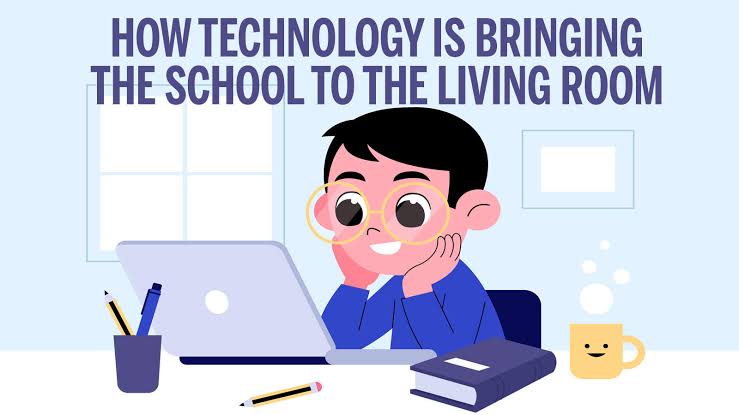
Today I'm writing about education and technology. How technology play role in education. What kind of role technology plays in education. How technology is bringing the school to the leaving room. Which type or system we have and also which type of atmosphere we have in class room and also in leaving room. Which is the best atmosphere for study.
In 21st century, Digital Literacy became necessary for everyone. As a result of it, it becomes inevitable to include technology in education system. After an enlightened discussion on the use of web tools in teaching / learning it becomes vital to know about the students views / understanding on integrating the technology in education.
Digital Immigrants and Digital Natives by Marc Prensky :-
When we talk in terms of future generations, only technology can provide better future. There are so many benefits of using technology in classrooms.
The video is about Digital Immigrants and Digital Natives by Marc Prensky in which how digital Immigrants and digital Natives are very different to each other is discussed. Marc Prensky says that Digital Natives are extra intellectual than Digital Immigrants. Use of technology in education increased the level of accuracy in educational materials to a higher standard. Uses of new technologies are expanding. New computer programs and mobile apps are all playing their role to solve daily life problems.
They all are well equipped with today's technology. They all know how to use Computers, Laptops and video games. They all are self learners. They don't need any teachers for help. Google and Internet are their GURU. On the other side Digital Immigrants are not born into the digital world but have at some later point in our lives become fascinated by and adopted many or most aspects of the new technology are and always will be compared to them with digital Natives. In every discipline technology is very useful thing in human life. Education cultivate us from the animal to human being, it is fundamental right of people to be a literate and also it is very useful for live better life. So, with the passage of the time education also need to upgrade from chalk and talk to smart class. Digital classroom is necessary for teaching and learning process, it is useful for both teacher as well as students. In traditional way of teaching, teacher was at center but now in this age student is at center. Teacher's work as facilitator because through the technology students come with every information and work themselves so teacher's work is to facilitate them. Students can learn anytime from anywhere through digital classroom. Teacher can teach all the subjects like Math, science, History, Language, Geography, etc through technology.
Technology stimulate learning interest in the students much better than traditional way of lectures. So, according to me technology is necessary in education for better future career of the students or we can say that technology means good facility hence students and teachers have good facility in education. Digital Immigrants learn like all immigrants some better than others to adopt to their environment they always retain to some degree, their accents that is their foot in the past. Marc Prensky gives few fundamentals to differentiate Digital Immigrants and Digital Natives. According to him.
1. MULTI BAGS
2. Parallel Thinkers
3. MULTI MEDIA
4. MULTI RESOURCES
♧ Digital Immigrants are :-
1. LIMITED RESOURCES
2. TEXT
3. SEQUENTIAL THINKING
4. SINGLE TASK
These all are the some of the basic characteristics given by Marc Prensky to Digital Immigrants and Digital Natives. Further more in this video he says that Digital Immigrants teachers in the schools say their students in the classroom to search perticular topic on Google but Digital Natives teachers directly send the URL to their students and ask tp do flipped learning. Here I would like to put one more point is that Digital Natives are intrested in developing digital library, on the other side digital Immigrants are working with text books as well as resources material both.
So, there are some basic differences which is given by Marc Prensky in this video. We can integrate technology in the classroom through various web tools like power point presentation, Blog task, Flipped learning and social media like Whatsapp and Facebook, in which Flipped learning is very interesting because it broke the traditional norms of teaching and learning in the classroom. Students can learn any time from any where through flipped learning. Teacher can engage the students without his or her presence.
The Changing Paradigm by Ken Robinson :-
In this video " Changing Paradigm " by Sir Ken Robinson is talking about the public education system. In the beginning of the video he says that,
" Every country on the earth, at the moment is reforming public education. There are two reasons for it,
{1} ECONOMIC :- Economic people are trying to work out how do we educate our children to take their place in the economics of the 21st century?
{2} CULTURAL :- How we can pass on the cultural genes of our communities while being a part of the process of globalization.
Teacher and technology both are significant in the process of teaching and learning. Technology is better for leaning in new style, it gives you information but don't guide like teacher. Technology do not teach you life lesson and not be a role model for you but teacher can teach these all aspects of life. Teacher teach you to connect the dots but technology can't. But the problem is that the current education system was designed and conceived and structured for a different age. It was conceived in their Intellectual culture of the enlightenment and in the economic circumstances of the Industrial revolution before the mid of the 19th century. There were no system of public education.
In the age of technology we have to integrate it in our education but teacher also much needed to guide. Many times student like me failed to understand some topic while reading in google and watching videos but my professor Dr. Dilip Barad can teach me with the help of various examples, hence teacher is very helpful to understand easily. Public education paid for from taxation compulsory to everybody and free at the point of delivery that was a revolutionary idea and many people objected to it. They said it's not possible for many street working class children to benefit from public education. They are incapable of learning to read and write.
We come to think of as academic ability and this is deep in the gene pool of public education of the really two types of the people :
1. Academic & non academic
2. Smart people & non smart people
The main point that is discussed in this video is Economic and cultural. If we think about education then ideally we believe that education is for humanity and also a way of darkness to the light. But that is only an ideal thinking, truly the education is for stable economical conditions. The result is that many brilliant people think they're not because they're are being judged against this perticular view of the mind. So, we have twin pillars 1. ECONOMIC & 2. INTELLECTUAL. According to Ken Robinson this model has caused chaos in many people's lives. This is called " Modern Epidemic " and it's as misplaced and it's as fictitious. This is the Plague ADHD.
Ken Robinson raised a question about How do we educate our children to take their place in the economics of the 21st century ?Another is how we can teach the cultural identity of people to the children. He also made a point that the current education system was designed and conceived for a different age. The idea of public education is based on two factors: Economic and Intellectual. He was also telling that this model has caused chaos. In which we come to know that students become like customers.
He was also talking about diverge thinking. It's an ability to creative thinking and creativity. There is not only a linear or convergent but a multiple answers possible. Education system makes a dumber generation. Our children are living in the most intensely stimulating period in the history of the earth. That is being besieged with information and porce. Their attention from every platform computers from iPhones from advertising hoardings from hundreds of television channels. If you travel east across the country people start losing interest in Oklahoma.
They can hardly think straight in Arkansas. Ken Robinson believes that we have a system of education that is modelled on the interest of industrialism and in the image of it. He also talks about " Divergent Thinking. " Here I would like to put GIF of some photos in which sir Ken Robinson draws the picture of Divergent thinking.
The School in the Cloud and Future of learning by Sugata Mitro :-
In this video at the very beginning Sugata Mitro asks one question,
" What is going to be the future of learning ?"
He says that if we look at the past, where it come from ? then in present it is quite easy to figure out. We say, It came from about 300 years ago and it came from the biggest empire on this planet, " The British Empire." They ran the whole planet without the computers, without the telephones with data handwritten on pieces of paper and travelling by ships.
This video is about Sugata Mitra, it was amazing in which we found some of the very interesting ideas about education and learning. At the starting point he was talking about where the school learning came from ? Of course that is from Victorian people. The education system has become a bureaucratic administrative machine. Because of the empire the Victorian wants a people who can read, write, good handwriting, multiplication in mind. But now a time empire is gone. But the system of education is the same. So Sugata Mitra had questioned the system. He also talks about self learning. He had done interesting research in the education process.
This machine is called, " The Schools." The people who are in the schools they must know three thing :
1. They must have good handwriting, because the data is handwritten.
2. They must be able to read.
3. They must be able to do multiplication.
The British empire is gone. But the main question which Sugata Mitro ask is that,
" So, what are we doing with that design that produces these identical people and what are we going to do next?"
But now in the present time the schools are outdated. He says that clerks are the computers. Those people don't need to write beautifully and multiply numbers in their heads. They need to be able to read. But we must have to think that what will be the future and how today's schools are preparing them for that world. Sugata Mitro is sharing his experience which had happened in Delhi before a years ago.
He was talking about the current education system, and also what should be the system of learning. How technology is helpful to the education system. According to him now is the time we should not need to follow the system that is going on in our education system. He came across two types of people : The Slums and other who knows everything how to runs computer programs and everything. They said Sugata Mitro about their children that,
" You know my son, I think he's gifted. "
At that time he was shocked and decided to do something for the poor children. And then he started doing experiments to those poor children of remote area villages. He gave them computers and made them self learners. He got very satisfied results. Then he thought to do more for them. Sugata Mitro asks the question,
" What it will be tomorrow ? "
Could it be that we don't need to go to school at all. If you wish to find out something, you can find out in two minutes. Then Sugata Mitro created one programme called, " SOLE " ( SELF LEARNING ORGANISATION LEARNING ENVIRONMENT ) Broadband, Collaboration and encouragement. At the end of the video Sugata Mitro says that,
" My wish is that we design the future of learning. We don't want the spare part for a great human computers. Only we need to design future for learning. This is called, " The School in Cloud. "
--Sugata Mitro
Let's use video to reinvent education by Salman Khan :-
This video is about which way the idea provokes in the mind of Salman khan, to develop such a platform like Khan Academy. In this video we get to Know the journey of the whole platform. How it started and all those things. We also come to know that is how this platform is different from the actual classroom. Salmanan is a founder of " Khan Academy. " We all know that Khan Academy is a non profit course which helps to students and teachers to work individually and collaboratively. It is known for it's collection of videos. It is the platform where students can find their own individual pace. Students can choose whatever and which subject they want to learn. Like Maths, Science, Science and technology, Geometric and many more other.
In this video Salman Khan is talking about his experience and how he started this course. We all know that one single step can help you to get great success. Salman Khan started to put the videos on YouTube. Slowly and steadily he got comments from visitors. Many of them were kids, students and teachers also. Then he came to know that it is helping teachers also. So, he started developing this programme. In this video he is saying very interesting thing is that,
" When those teachers are doing this experiment in classroom, there's the obvious benefit- the benefit that now their students can enjoy the videos in the way that my cousins did. They can pause, repeat at their own pace, at their own time. But the more interesting thing and this is the unintuitive thing when you talk about technology in the classroom by removing the one size - fits all lectures from the classroom and letting students have a self paced lectures at home and then they will go to classroom, letting them do work, having the teachers walk around, having the peers actually be able to interact with each other. These teachers have used technology to humanise the classroom."
It's something innovative and interesting. There we come to know that all the hypotheses that Teachers and students have that are broken. Because in Khan academy we can see they taught beautifully each and every subject. They covered everything from basic arithmetic, all the way to vector calculus. He started from the YouTube videos. And he also talked about some of the comments that he got on YouTube. That is also amazing. So the point is that learning through videos is helpful to students, because they watch videos anytime wherever they want. If they want to repeat they can repeat it. That is the benefit of learning from videos.
Salman Khan also differentiates the learning outcome of the traditional learning and learning from Khan academy. This academy encourages students to master over the specific subjects. They also give mastery points. How consequently looking at the students' learning process. There is also a concept of peers Teaching to peers. The concept is like let's teach for mastery not for test scores. The most interesting thing which I like most is that now teachers can give their more time to students to sit around them and interact with them that what have they did and how many videos they have seen and where have they doubt. Students can learn in their own time. This is how Khan Academy course work. Student will get energy points and badges on their performance capacity and level. This is all about Khan Academy by Salman Khan which is discussed by him in this TED TALK video.
Today I'm writing about education and technology. How technology play role in education. What kind of role technology plays in education. How technology is bringing the school to the leaving room. Which type or system we have and also which type of atmosphere we have in class room and also in leaving room. Which is the best atmosphere for study.
Today I'm taking about technology. The way people are using technology that was sometimes harmful for them. Technology is that much use full fo us also. In that blog I giving such arguments and talking about how to use technology. Our Prof. Also talk about that. For Prof. Dr. Dilip Barad Sir's blogspot click here. And watch video how you will use technology in better way or different way also. And how to change your thoughts regarding to tecnology.
How people use technology for teaching purpose.
The way of thinking people it want be change in that time. The way of thinking and expressing your thoughts is like morden or you will use technology but some people are not understand that.
The way of thinking its motivate others. How you learn the new things and how you create such space in the world. The word IIN is gives you confidence and yoh aslo do arguments with other people also. Technology has made it possible for students to gain qualifications online and educate themselves through institutes that offer online courses. They can learn from home without having to pay to commute or move away to attend university. Working professionals have the opportunity to pursue further education without having to give up their full-time jobs. Being able to learn remotely has been revolutionary because it has made education accessible to everyone. Technology is being used to teach differently, whether that through online learning or merely showing a video in a classroom.
This addvertisement shows that how you learn from your parents but now a days the want your support and they want to learn from their child. So be supportive and help your elders. If they don't know how to use this technology , and how its work you will help them how to use it.
In second advertisement says same thing if you know the use of technology than you will help to others.
The way of communications and which type of critical thinking, creating such things like quiz, write blogs, video and live classes. The thinking process want be change. Its ease of use and accessibility impacts and benefits both the student and teacher. For example, a teacher can ask students to take an online quiz which will provide them with instant feedback, eliminating the time that the teacher would have otherwise taken to grade and look through each assignment. Technology reduces both the time and cost of teachers and also allows students to remain on top of their education by having permanent access to information, for example being able to check deadlines or emailing a teacher about queries that they may have at any time of the day.
Teaching is now more than a lecturer in front of a blackboard and technology has been an integral part of its development. It has transformed education and the way that people learn and retain information. Therefore its role in the future of education is a fundamental part in maintaining the growth and progression of today’s economy.
In last how you use technology and how you learn from technology and how your time you use in technology. Technology giving very much things it's make us technological machine. We are sometimes depends on technology for such things.
Have you ever seen wind and water making art by themselves? Have you ever seen an artist who without any particular tool makes beautiful piece of art? Have you ever thought Time can make art more beautiful? Have you ever meet a person who don’t believe in immortality of art? Well here it is. Andy Goldsworthy is a British sculptor, photographer and environmentalist who produces site-specific sculptures and land art situated in natural and urban settings.
He don’t use any particular tool to create his piece of art. He goes to the nature, finds something which is given by nature, and after making it give it back to the nature. He is working with time. He knows when the sea will touch his work. He knows after how many days the art will show up. With that understanding of time he creates something beautiful. He believes in flow, flow of everything. He also says that everything has fluidity. Here we are talking about his documentary, “River and Tides – Working with Time”s This movie based on British artist Andy Goldsworthy. He was master to making arts.
He created arts with natural materials such as rocks, leaves, flowers and intricate.As we all know nothing remains permanent. As it is Andy Goldsworthy working with time and nature. Goldsworthy is famous throughout the world for his work in ice, stone, leaves, wood, and he felt that he has deep connection with the earth. May be he is working seasonal changes. He made a sculpture with the help of stones. One beautiful thing is he uses the natural background music.
He creates mountain shape with stone in the river and show what is reaction of nature carry or change. This experiment through we can say he respects process of life and death. He created lot of things sometimes he became success and sometimes he became failure to making arts but he never deficted. Goldsworthyy says that "Art for me is a form of nourishment". He notices sculpture, "The very thing that brought it to life, will bring about its death." The documentary described about Scottish landscapes.
He talks about the impact of sheep on the Scottish landscape, and made a chain of green leaves and placed them in the water. Beautiful stonewall, crosses a field, and goes under a river, and emerges to wind through the trees on the other side. Goldsworthy finds red stone, terns it in a powder and release it into a waterfall. He does all the things and explained it with certain philosophy.
He creates an igloo out of driftwood collected from the beach. When the tide comes in, the wooden structure begins to float and then drift to the sea in a slow swirl. But he is not attached with his arts and he believed nature free from every boutage so we can not bluge in one shape.
As friendly I say I am most inparied to watching this movie. I learn what is important of experience and learning, most of we feel disappoint but it is not good process of learning. Most of we are forgotten we are part of the nature.
His most famous quotes
"We often forget that we are Nature. Nature is not something separate from us. So when we say that we have lost our connection to nature, we’ve lost our connection to ourselves."
English is not our native language; this language is borrowed from England. In this modern and global world English becomes necessary. Every field required Basic English. In education, business, multinational companies, science and technology, marketing and advertising, we use English language. That’s why English language is important for us and without it we can’t attach in the world. For example, if we go to foreign, visa is necessary, this process is done only when we are eligible in speaking English.
Sometimes in our mind question arises that why we have to learn English language?
Many people believe that our mother tongue is this so we have to speak only this language. For example, if my mother tongue is Gujarati, I need only this language. But this idea is breaks when we go to another state because they have their own language. So we can’t understand it. English language is necessary to learn because it is the central language of the world.
The role of English in India is now conducted with new generation and English as a globe in whole the world e pretend to learn and think. English is a skill to get a healthy job and survive in the international world. We cannot ignore the way that the English language has emerged as a powerful agent for change in India.
India is a multilingual country but the spread and growth of English language is now on the top. And in India we see English education is now expanding very futile way. ELT is the curriculum that gives us techniques of this process and how in India it is become fashion and the thing of learning. When SLA comes in learners of English, that time we have to discuss the globalization world and one cannot ignore the world of E-learning. After that it is also necessary to include the term of CALL that now is so important in role of English that L2. TESOL is the base in which English in India is on the trek to call as Role of English in India is educated fruitful with it.
Wherever we go, if we know English we can easily communicate with those people who knows English. In 21st century, computer and technology played a vital role in our world. Through technology, our world has become the dreamland.The English language is a powerful force not just for economics, business, and trade, but for mutual respect and progress. It is also becoming the common future of human commerce and communication. English is the best tool to provide good opportunity for the learner to learn.
This is also the language of instruction in all the Universities and colleges across the country. The scenario is such that one needs to polish the skills of English to obtain a job. Mere knowledge of subjects is no more the only criteria to secure a job in today’s date. With the growing globalization, one must definitely be able to communicate in English and should have a good English vocabulary, if one wants to go across the country for educational or job purposes. Through multiple computer or mobile applications within a second or minute, we can transfer many things. So in all these fields English become necessary.
The Role of English in India
When India attained freedom in 1947, many changes take place. In institutional and instrumental functions were retained, a new national flag symbolising, new values, pride and power to the emergence of a new society. Then which language make to official language, Hindi or English that question arise. Finally Hindi selected as Devnagri script, which will become the sole official language. In 1963, the parliament passed the Official Language Bill providing for the continued use of English. English now is the associate official language of the Union. The official language of the States with provision for continued use of English.
There are many important functions which English continues to perform in India today according to the reports of various commissions appointed by the Government to assess the role of English in India. The following pertinent conclusions can be drawn:
English is the language in which nearly all contemporary knowledge is accessible. It is the language of development. Obviously then, for healthy development in all fields of our national life, our scientists, technologists, doctors, engineers, agriculturists, economists and experts in numerous other fields must have access to the international professional literature in their respective fields, be able to contribute to it and exchange their views on important issues with their counterparts in other parts of the world. Most of these functions can, at present, be performed only through the medium of English and therefore it would not be wrong to say that it is our "window on the world".English enjoys the status of the "associate official language" and the de facto link language in our country.
It is the language favoured by the industrial houses, legal and banking systems, trade and commerce and defence. English continues to be the medium of instruction at many post-graduate institutions, All India Institutes and other professional and technical institutions of higher learning. It is expected that English will continue to perform these functions for a long time to come. It is therefore necessary to provide facilities for learning English to those students who may want to pursue their higher studies at these institutions. The role of English as a "library language" cannot be undermined even where the medium of instruction is other than English.
After Independence, the different regions and linguistic groups to share its benefits because of the dependence on international powers. Positions of power dependence on international powers. Positions of power depended on the advantages of English. In the country, democratic political system people demands for equal treatment to all the major languages. Then English was projected as the neutral language with no regional or ethnic base in the country. English served as a political weapon for the non-Hindi elites to contain the emergence of Hindi as the new language of power.
At that time lower castes in education employment through the system of reservation, English language give them access to wealth, power and status as it did to the higher castes earlier. In schools the medium of language is English. English is an alternative medium of school education like primary, middle and secondary. English medium is prestigeous and is in great demand. Because of the effect of the English lack of development of Indian languages. English taught in more than 2,00,000 schools. As a second language of bilinguals in India English stands for top of the list. More value of English become not good for India, because we face double face of English in India. For example, the number of the students learning English has greatly increased, but their level of competence in English has decreased. That’s why only learning English is not important but its level is important.
The increasing demand for English decreases its standard. Speaking is one of the most difficult skills language learners would face. In spite of this, it has traditionally been forced into the background while teachers of English, have spent all the classroom time trying to teach students how to write, to read and sometimes even to listen. English speaking is generally thought to be the most important of the four skills. This skill is the most complicated due to the fact that non-native speakers have to interpret not only the message that other speakers try to express, but also take into account other possibilities. The term Second Language is understood in two different ways;
Ø English as second language at primary
Ø English as a second language in school education after the primary stage and has a pedagogical as well as functional definition, in the context of ‘three- language formula’
English Language understood as a Second Language to Historical Perspective:
English in India is a symbol of linguistic centralism. Indian languages seen to be as represent linguistic regionalism. ‘English-knowing’ is a part of conceptual structure and it has three parts:
modernization, mythology and language policy.
Concept of modernization and internationalism were invoked in English became the language of both modernization and internationalism.
Language-planning operated with a whole set of lexical weaponry that gradually created a new mythology.
Regional Languages- ‘regional’ is in opposition to ‘national’. English is one ‘pan-Indian’ language that would promote National Integration.
English language had come into India along with colonization. The British, as they set their empire in our country brought in their language too. They realized the necessity for this for their own selfish needs. But it did do lots of good for us in the later years. The missionaries also did some role in spreading English education in order to preach their religion. There were lots of debates to eradicate English language in the post-colonial scenario. All these were more on a nationalistic sentiment basis. But these arguments came to an end and English was decided to be made the Associate Official Language until further decisions were taken. During the British reign, the medium of instruction in all governmental institutions was English. This continued now too. English was also helpful in solving the crises of languages in India. Our country has many languages and the States were divided on linguistic majority basis. So when time came to decide about a National language, there were lots of issues. Though Hindi is our National language today, there were lots of issues then.
English acted as a link or bridge language and cut across all regional linguistic barriers solving a major issue. It became our language of communication. On example for this is the Judiciary system in our country. Almost every action from the dressing to the presentation of cases happens in the way it happened during the times of the British. They had created the system. We made certain small changes to it. But still many of that day’s aspect exist even today, just like the English language.
T.S.Eliot (1888- 1956) was an essayist, poet, publisher, playwright, literary and social critic. He belonged to an old Yankee family. He was born in St.Louis, Missoure. Later on in 1914 at the age of 25 he left USA and since 1927 he was a British citizen. He was a modernist writer. He brought Greek Chorus in modern poetry that start with striking title-----
“Nam sibyllam quidem Cumis ego ipse oculis Meis
Vidi in ampulla pendere, ET cum illi pueri dicerent:
Sibylla ti theleis; respondebat ill: apothanein thelo.”
His works:
Some of his well-known poems are:
ü The Love Song of J.Alfred Prufrock 1915 ( this poem is seen as his masterpiece in modern literature)
The Waste Land 1922
The Hollow Men 1925
Ash Wednesday 1930
Four quartets 1945
He also wrote plays:
Sweeney Agonistes
Murder in the Cathedra
The Rock
The Family Reunion
The confidential Clerk
The Elder statesman
He received the Nobel Prize in Literature in 1948 and Order of Merit 1948
The Waste Land:
This poem is widely regarded as “one of the most important poems of the 20th century” and central texts in Modernist poetry. It was published in 1922. It contains 434 lines. It was first seen in the UK in the October issue of The Criterion. In the U.S. it was issued in ‘The Dial’. It contains famous phrases like
April is the cruelest month, breeding
Lilacs out of the dead land, mixing
Memory and desire, stirring
Dull roots with spring rain.
The Wasteland follows the legend of the ‘Holy Grail’ and ‘The Fisher King’. Many literary and cultural allusions are found in the poem. Some of the allusions of Western canon Buddhism and the Hindu Upanishads are delineated. Some critics regard the poem as obscure.
“The poem shifts between voices of satire and prophecy featuring abrupt and unannounced changes of speaker, location and time and conjuring of a vast and dissonant range of cultures and literature.
What is a Myth?
“A traditional story, especially one concerning the early history of a people or explaining a natural or social phenomenon, and typically involving supernatural beings or events” (oxford dictionaries)
An exaggerated or idealized conception of a person or thing: ‘the book is a scholarly study of the Churchill myth’.
A fictitious or imaginary person or thing: ‘nobody had ever heard of Simon’s mysterious friend – Anna said he was a myth’. (oxford dictionaries)
There are many myths which can be observed in this poem. T.S Eliot’s The waste land is an important landmark in the history of English poetry and one of the most talked poems of the same Age. Here T.S Eliot described the mythical background in his poem. This mythical technique can be elaborated as given below.
· The Grail Legend
· The King Fishers
· Myth of Tiresias
The grail Legend:
The Myth about this vessel was that at have acquired medicinal and miraculous properties so the result is that it became an object for purity or one kind of devotion and worship. The lance used to pierce the sides of Christ and kept with it. But a time the original Grail was mysterious disappeared and many of the bold Knights staked their lives and then search for this vessel. It was generally believed that the grail was sometimes couldn't be found in the sky as the floating saucer but it could only the seen by those, Knight's who were virginal beauty.
Themes of the poem:
“The Waste Land” possesses many theme and all these themes have been very well elaborated by T.S Eliot, who conveys these all themes through symbolism and of course with the help of various mythical technique, here in this poem “The Waste land”, T.S Eliot indicates his ideas so it is very much difficult to understand this poem at a first reading but an individual has to read twice or thrice then and then he/she can grasp the central idea of the poem.
Here are several themes, which can be observed
· Death
· Rebirth
· Love
· Lust
· Water
· Spiritual degradation
So now let’s discussed these themes in detail.
The waste land is one of the most popular poems of the 20th century. It is written by T.S. Eliot. It has been saluted as Eliot’s masterpiece the supreme power of the poetic art in modern times. It is a poem written in the epic mold. It presents messages for our turbulent times. His use of complex symbols and imagery adds richness and variety to the texture of the poem. It is full with allusions to myth, ritual, religion, history-both past and present. These things make the poem itself a virtual “waste land”. We can see a wide range of socio-cultural, religious and secular experiences common to both an individual life and the collective life of western society. It is a truly remarkable poem that broke new ground in English poetry. There are so many themes in this poem so I would like to discuss them one by one. The themes are like death, rebirth, the seasons, love, lust, water, history etc.
Death: -
There are four sections and the two, of them “The burial of the Dead” and “Death by Water” refer specifically to this theme ‘Death’. There is complicate matter like death can mean life as in other words by dying a human being can pave the way for new lives. The poet asks his friend: “and the same way Christ, redeemed humanity and there by gave new life. The doubtful part of the poem is between life and death allusions to Dante, and especially in the limbo-like vision of the men flowing across London Bridge and through the modern city.
Life-in-death: -
The theme of the poem is the spiritual and emotional barrenness of the modern world. This theme is like the living death of the modern Waste Landers. Man has lost of vitality of spiritual and vitality of emotional. The life in modern waste land is a life-in-death, a living death. According to Eliot’s philosophy, Human being must act do either evil as good and it is better to do evil than do nothing. Modern man has lost his sense of good and evil, and this keeps him from being alive. In the modern land the people are dead. They merely exist like dead things. They work as machine. They are to be compared to such dead things as a stick, a gutter, a pipe. A life of complete inactivity is listlessness and apathy. That is way winter is welcome to them and April is the crudest of months.
Rebirth: -
We can see some images of the Christ along with the many other religious metaphors, rebirth and resurrection as central themes. The waste land lays fallow and the fisher king is powerless. The new beginning is that they needed something. Here we can take help of water, for one water can bring about that rebirth but it can also destroy. The poet turns the waste land in heaven with the climatic exchange with the skies: “Datta, Dayadhvam, and Damyata.” The poet’s sight is essentially of a world that is neither dying nor living. Hence the strength of grail can restore life and wipe the slate clean Eliot refers frequently to baptisms and to rivers in either spiritual or physical ways.
The seasons: -
The poem opens with an invocation of the month ‘April’, “April is the cruelest month.” The season spring is depicted as cruel is a curious choice on Eliot’s part. As a paradox it informs the rest of the poem to a great degree. The life brings also death. It brings the seasons fluctuate from one state to another. They maintain some sort of stat is nothing everything changes like history. In there end of Eliot’s world hangs in a perpetual limbo, Waiting the dawn of a new season. We can see some aspects of seasons in the life-in-death, a life of complete inactivity, listlessness and apathy. That is why winter is welcome to them and April is the cruelest of months. It reminds them of the stirring of life and , they're dislikes to roused from their death-in-life. In this poem Eliot’s “waste land” there seems little hope of renewed life as the early spring rains manage to stir only “a little life” in the “dull roofs” and “dried tubers” that is await their renewal each spring. Easter Sunday commemorates Jesus’ resurrection, fall's in April. The poet ironically comments here that April is the “cruelest month” and also he comments that April as the stirring of natural life and the spiritual resurrection symbolized in Easter fill humans. Today is not with hope but fear and apprehension. There are some phrases suggested the same things, like “dead land”, “dull roots ”, “dried tubers and “forgetful snow”, these four phrases suggest the barrenness of earth and vacuity of life.
Lust: -
There is the most famous episode in the poem” the waste land”. It involves a female typist’s sexual relation with a “carbuncular” man. In this poem Eliot represents the scene as something similar to a rape. This chance sexual encounter carries with it mythological luggage the violated Philomela, the blind man Tiresias who lived for a time as a woman. There is sexuality goes throughout the poem “the waste land”. It takes the center stage as a cause of calamity in the part “the fire sermon”. Here in this poem the poet acts as a lawyer “a moment’s surrender” as a part of existence in “what the thunder said”. There are seven deadly sins in Christianity and lust may be a sin. Sex may be too easy and two flourishing in Eliot’s London. There is action is still is sex that produces life, that restores-sex. In needed is sex that is not sterile. Spiritual sterility is the central motif of all these myths of the past. Besides this there is an emphasis the sanctity of sex. There is decay and spiritual degeneracy whenever the sexual function is perverted. The purpose of the sexual function is procreation and it is sanctified only in marriage. When the sexual act is separated from procreation, there is spiritual degeneracy. In modern society there is perversion of sex and hence its degeneracy. Sex has been separated from love, marriage and procreation. The sex-act has become beastly or mere animal copulation and thus there is decay and spiritual degeneracy. Hence in Eliot’s poetry man is often linked to animals. Sexual sins, perversion of sex, have always led to degeneration and decay. The sexual sins of the king fisher and his soldiers laid waste his kingdom, and ancient Thebes was laid waste because its king was guilty of the sin of incest. Sexual violence has always been there. Philomela was raped and her tongue was severed so that she may not reveal the crime. Reference to Elizabeth and Leicester in the song of the daughters of the Thames shows that sex relationship in the past also has been equally futile and meaningless.
Love: -
There are some references regarding the theme love in this poem. The first part of the poem “the burial of the dead”, in this part we can see some reference to Tristan und Isolde. The second part of the poem is “The Game of chess”. In this part there is a reference to Cleopatra and to the story of Tereus and Philomela suggest that love in the poem “the waste land”. It is often destructive. The characters Tristan and Cleopatra die while Tereus rapes Philomela and even the love for the hyacinth girl leads the poet to see and know “nothing”. The correlative love of life is found in this poem. When the poet writes regarding “hyacinth girl” and being so in love that he did not know if he was alive as dead. He was speechless. He was silence. This is an intense love that I interpret this to be more for the love of life than for love of the girl. The interest in the girl simply allows him to see the beauty of life. Joe even tries to commit suicide at one point, but he still seems to lack a real fear of death. However, Joe is the only one who begins to love his life. Joe finds his love for life through his lover, his freedom, and his that Joe comes to the realization that he has purposely ruined the life of one of his “brothers”. During the time of T.S. Eliot the people too young to come to terms with any real fear of death those people living during this time they did fear and thus their love for life was enriched. “Brothers three” never really found that fear of death they never found that true correlating love of life either.
Conclusion:-
In short the waste land at every angle reflected as a modern poem. Poem is feather on the hat of modern literature and also of modern people. But the poem has its own pros and cons. Pros in the sense it is gave the direction to the people. And cons in the sense that poems first announced as a depersonalizing of the poet but later on the secret was revealed that's poem was totally depends on the poet’s own experiences. Poet and his personal life fully reflected in the poem. Though it’s not the life of only T.S.Eliot instead of that it is reflected all the life of modern people.
There are many themes. They are very helpful to understand the whole poem very easily. There are some important aspects remain in themes so themes can be important to study any other texts.
Name :- Sejal N. Solanki Course & Year :- M.A. Sem 3(2019-2021) Roll No. :- 25 Enrollment No. :- 2069108420200037 Paper :- The American Literature Topic :- The Scarlet letter Email :- sejal.solanki3107@gmail.com
Submitted :- Prof. Dr. Dilip Barad Sir :- Department English.
:- M.K.B. University.
About the Author
The Scarlet Letter was written by American author, Nathaniel Hawthorne. He was born in 1804 in the city of Salem, Massachusetts to Nathaniel Hathorne, Sr., and the former Elizabeth Clarke Manning. He was a descendant of a long line of Puritan ancestors. In order to distance himself from his family's shameful involvement in Salem Witch Trials, Hawthorne added the "w" to his last name.
After his father, a ship captain, died of yellow fever at sea when Nathaniel was only four, his mother became overly protective and pushed him toward relatively isolated pursuits. Hawthorne's childhood left him overly shy and bookish, which molded his life as a writer.
Hawthorne turned to writing after his graduation from Bowdoin College. His first novel, Fanshawe, was unsuccessful and Hawthorne himself disavowed the work as amateurish. However, Hawthorne returned to Salem where he struggled as a short story writer for 12 years. He published Twice-Told Tales in 1837. His insufficient earnings as a writer forced Hawthorne to enter a career as a Boston Custom House measurer in 1839. In 1842, he married Sophia Peabody and moved t The Manse in Concord. Hawthorne returned to Salem in 1845. Hawthorne then devoted himself to his most famous novel, The Scarlet Letter. The Scarlet Letter was an immediate success that allowed him to devote himself to his writing. He published The House of the Seven Gables in 1851. Hawthorne passed away on May 19, 1864, in Plymouth, New Hampshire, after a long period of illness during which he suffered severe bouts of Grave of Nathaniel Hawthorne dementia.
About the Book The Scarlet letter
The scarlet letter is meant to be a symbol of shame, but instead it becomes a powerful symbol of identity to Hester. Originally intended to mark Hester as an adulterer, the “A” eventually comes to stand for “Able.” The letter showcases her talent and artistry skills that allow her to live as a single parent in Puritan Boston. Also it represents her strength and independence. Then many years later, when Hester returns and voluntarily takes up the scarlet letter again, it has become, for her and others, a symbol of grace.
The Time Period
The plot of the Scarlet Letter follows Hester Prynne, who has been forced to wear the letter 'A' on her dress, for committing adultery. In the time of the story, bearing a child (Pearl) without being married was a great crime, and was punished by the embarassment of having to wear the 'scarlet letter'.
The story of the Scarlet letter is set in 17th-century Puritan Boston during the years 1642 to 1649. The Puritans had settled in New England to practice their religious beliefs after leaving the Old World, where they had been persecuted. The Puritans were a legalistic sect of Protestant Christians influenced by Calvinism. Their beliefs emphasized God's omnipotence and the concept of election, the idea that salvation is predestined. Religious behavior was seen as both a result of salvation and evidence of it. Thus, Puritan communities were centered on the idea of purity in thought and deed, and sins were rooted out and punished harshly.
However, over time, people begin to misinterpret the letter as meaning that she is an important part of high society, due to the color and design of the letter.
It is later revealed that the minister of the town was the father of the child, but they kept it a secret for various reasons. Roger Chillingworth, Hester's wayward husband eventually finds out about their plans to run away together, and is about to have his revenge when the minister confesses what he has done, and dies.
The physical setting of The Scarlet Letter reflects the beliefs and habits of the Puritans. Throughout the book, we are taken on a mini tour of the most important town buildings and structures. Law and religion form the heart of the town. Two main characters in The Scarlet Letter are Hester Prynne and Arthur Dimmesdale.
Hester is the mother of Pearl, and is later revealed to be the lover of Dimmesdale. She is the main character in the novel, and bears the letter A on her dress.
Dimmesdale is a minister in Boston. Throughout almost all of the story, the general public doesn't know about his role in the birth of Pearl. However, fairly early on in the story, Hester's uncaring husband returns and finds out about it, and plots his revenge. Dimmesdale dies at the end of the story, and it is discovered that he bears the letter A on his skin.
There was some paradox....
Although Puritans embraced a strict life, it wasn't always somber and simple. They encouraged tradesmen and craftsmen to live among them They prized simplicity yet loved fine clothing. Their furniture makers developed great artistry and their leaders (like the governor Hester goes to visit) lived in fine houses.
Paradox is that the puritans stigmatize her with the mark of sin and in so doing, reduce her to a dull, lifeless woman whose characteristics color is gray and whose vitality and feminity are suppressed.
Over the seven years of her punishment, Hester's Inner struggle changes from a victims of puritans branding to a decisive woman in tune with human nature. When she meets Dimmesdale in the forest in chepter 18, Hawthorn says, "The tendency of her fate and fortunes had been to set her free. The Scarlet Letter was her passport into regions where other woman dared not tread".
In time, even the puritans community sees the letters as meaning "Able or Angel". Her sensitivity with society's victims turns her symbolic meaning from a person whose life was originally twists and repressed to a strong and sensitive woman with respect for the humanity of others.
In her final years, " The Scarlet Letter ceased to be a, stigma which attracted the worlds scorn and bitterness and become a type of something to be sorrows over, and looks upon with awe, yet with revenge, too". Since her chracter is strongly tied to the Scarlet Letter, Hester represents the public sinner who changes and learns from her own sorrow to understand the humanity of others. Often humans being who are suffers great loss and life changing experiences become survivors with an increased understanding and sympathy for the human loses of others Hester is such a symbol.
Hester refuses to tell Pearl what the scarlet letter signifies, and Pearl becomes obsessed with the letter. Meanwhile, Chillingworth is working in Boston as a physician, though he has no formal medical training. One of his patients is Dimmesdale, who has fallen ill with heart trouble. Chillingworth moves in with Dimmesdale to care for him full-time and begins to suspect a connection between Dimmesdale's heart ailment and Hester's crime. When he discovers that Dimmesdale has carved a mark over his heart that resembles Hester's scarlet letter, Chillingworth realizes that Dimmesdale is Hester's lover. Chillingworth decides to torment and expose Dimmesdale.
At worst, Dimmesdale is a symbol of hypocrisy and self - centered intellectualism, he knows what is right but has not the courage to make himself to do the public act. When Hester tells him that the ship for Europe leaves in four days, he is delighted with the timing. He will be able to give his Election sermon and fulfills public duties before escaping. At best, his when he worries, that his congregation will see his features in pearl's face.
Dimmesdale. When he leaves the forest and realises the extent of the devil's grip on his soul, he passionately writes his sermon and makes his decision to confess. As a symbol, he represented the secret sinner who fights the good fight in his soul and eventually wins.
In the play she suffers alot alone. Nobody gives support to her. Society creates difficulties for her. So it becomes difficult to live alone. But she does not loose her strength and faces the society. And she fights alone with society. She also confess her crime in front of society. She has courage to confess her crime. She does not loose her hope. But constantly society raises questions for her. But she gave the answer very clearly. She does not hesitate. But she has confident. And that's why her confidence gives strength to her. She also does not blames on Dimmesdale. She also does not takes his name in front of society. She remains silent. Maybe she has a hope that one day Dimmesdale confesses his truth in front of society. She is married that's why the situation becomes more difficult for her. And her hope becomes true and one day Dimmesdale confesses his truth in front of society. For Hester becomes difficult, and she get punishment to ware A, and that's why it becomes more difficult. Whenever she goes at place everybody talks about her. And they behave with her very rudely. But she becomes strong, and capable, dhe gives birth to child. And she takes the all responsibility. And she manages all.
Setting
It all goes down in mid-17th century New England, specifically Boston (Massachusetts Bay Colony). The Puritans had settled in New England to practice their religious beliefs after leaving the Old World, where they had been persecuted. The physical setting of The Scarlet Letter reflects the beliefs and habits of the Puritans. In the first chapter, we are taken on a mini tour of the most important town buildings and structures, the prison and the town scaffold. Law and religion form is the heart of the town.
Atmosphere
The novel The Scarlet Letter is mainly a gloomy, dark story because it is centered on sin in the puritan society.
Symbol/ Allegory
Pearl, Hester’s daughter, is a symbol of all that Hester gave up when she committed adultery and gave up her place in Puritan society. Pearl is a sort of living version of her mother’s scarlet letter. She lives in perpetual punishment because of Pearl, and that is why she loves Pearl so much. Pearl’s existence gives her mother reason to live, bolstering her spirits when she is tempted to give up. The name “Pearl” makes us think of precious jewels, we know that she becomes a great and wealthy heiress.
Conclusion
It can be concluded here that Hester's strength, honesty, and compassion carry her through a life she had not imagined. Hawthorne attributes this transformation to her lonely position in the world and her suffering. No friend, no companion, no foot crossed the threshold of her cottage Hester lives on, quietly, and becomes something of a legend in the colony of Boston. The scarlet letter made her what she became, and, in the end, she grew stronger and more at peace through her suffering.
In the play both are equally part of this crime. But only Hester suffers. And Dimmesdale has a fear of society that's why he does not confesses his truth. And later on he realised his mistake and confesses his truth in front of society.